FreeCell Table Management
Bad midgames do not usually die in one move. They die when the table is still moving but the future has already disappeared. What matters most is how many free cells remain, whether the empty column is worth spending yet, and whether the move breaks a landing spot you still need. This page stays with table management and separates live moves from the ones that quietly poison the next five turns.
Check These Four Things Before the Next Move
Use free cells to lift, not to park
A free cell is a working slot, not storage. The best rhythm is simple: park a card, remove the block, move it back out quickly. If you still do not know where the card goes next after it enters the free cell, the slot is slowing you down instead of helping. A move can feel easy and still spend the handhold you need later.
Spend empty columns on real work
An empty column is not most valuable as a temporary parking spot. It matters because it lets you rebuild entire lanes and move longer ordered sequences. When the table tightens, ask which blocked lane that space should help dismantle, not which card happens to fit there right now.
Protect landing spots before easy moves
A move being available does not make it urgent. If it spends a key landing spot and leaves another column with nowhere to go, it is only a convenient move in the moment, not a strong long-term decision.
Do not lose the way back out
The deeper the deal goes, the less margin you get for a dead-end move. Before you commit, look at what remains: how many free cells stay open, whether the empty column survives, and whether the key cards still have a path back if your read turns out wrong. A lot of expensive midgame moves lose not because they were illegal, but because they erased the way back out.
Four Midgame Reads That Keep the Table Alive
Why does the midgame tighten so suddenly?
Usually because several earlier moves spent space without restoring any. Free cells stayed occupied too long, an empty column got filled too soon, or a key landing spot disappeared. The table still looks playable, but the room to maneuver is already gone. Most collapses are not sudden. They are three or four losing trades in a row.
What counts as effective circulation?
It is not enough for the tableau to move. A move is effective when the next move gets easier afterward. That might mean exposing a key card, preserving a landing spot, or bringing one column closer to empty. If the lanes open wider after the move, that is real progress.
When should I fight for an empty column?
As soon as the table starts to tighten or your longer sequences stop moving. Empty columns reopen lines that looked dead a moment earlier. In the midgame, many of the biggest gains come not from winning one card, but from winning a whole column of space. Without that space, even the right read may be impossible to play.
When should I delay a foundation move?
Whenever that card is still doing important work as a landing spot in the tableau. If sending it up would strand another column or cut off a sequence, wait. It is stronger to loosen the table first and score the card afterward.
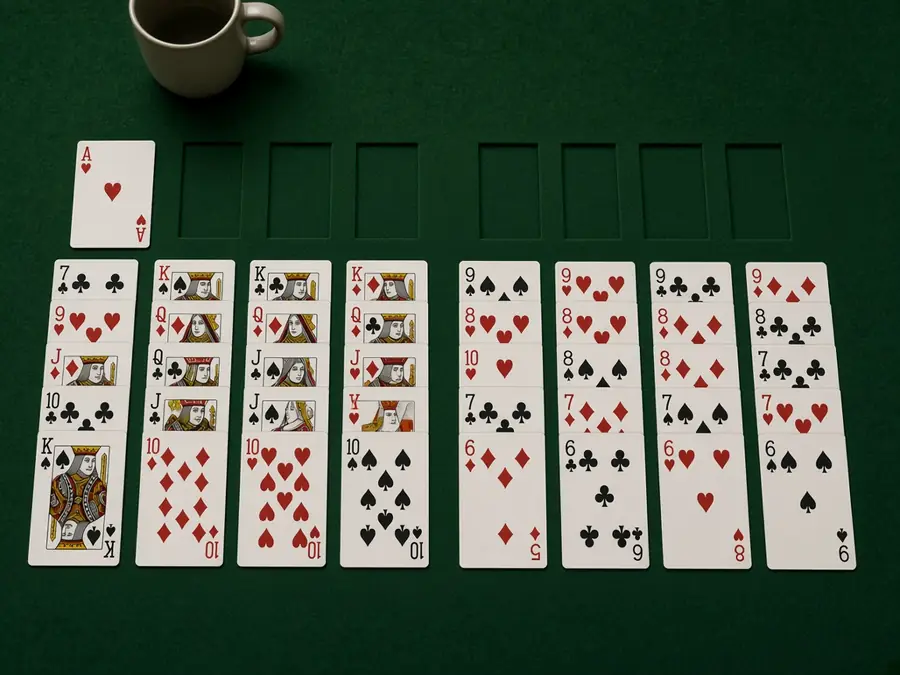
Once the free cells fill, the position starts charging you interest
The midgame mistake players miss most often is not whether one move works, but how much room survives after it. Every occupied free cell reduces how much temporary lifting you can still do. Before you spend one, ask a plain question: where does this card go next? If the answer is fuzzy, do not spend the slot yet. Once a free cell turns into long-term parking, columns that were manageable a moment ago can stop moving. What disappears is not just one slot, but the margin for the whole deal.
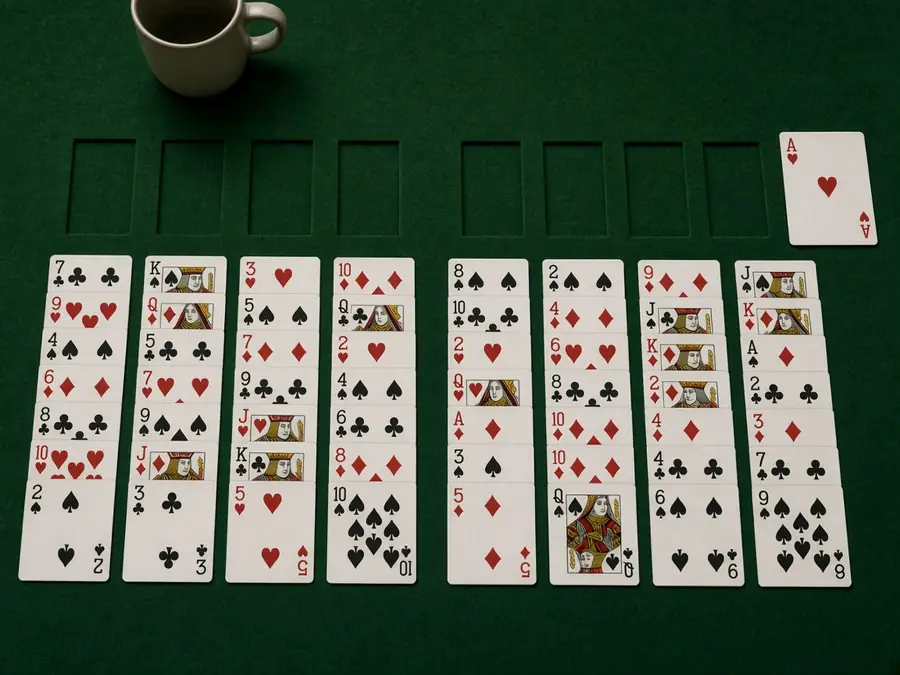
An empty column is not a spare square. It is your workbench.
Many players finally clear a column and then refill it on the next move out of habit. That is how the table closes again. The real value of an empty column is not helping one loose card land. It is giving you room to carry whole ordered runs and dismantle a blocked column from the inside out. When the position tightens, the better question is not whether the space can be used. It is whether this move increases the value of the empty column or spends it cheaply.
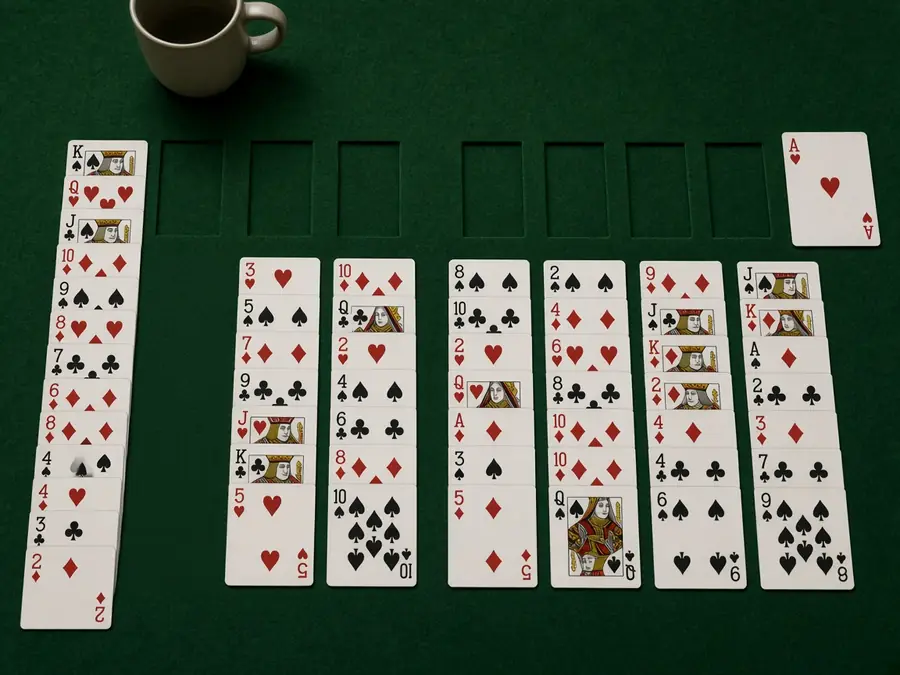
Midgames usually break at the landing spots first
A move can look smooth and still be wrong. A card that can be moved, scored, or tucked away right now is not automatically ready to leave. If it is still the only workable landing spot for another lane, removing it can break the whole position behind the scenes. Stable table management means checking what remains after the move, not just whether the move exists. If the board has fewer places to breathe afterward, the move probably cost more than it returned.
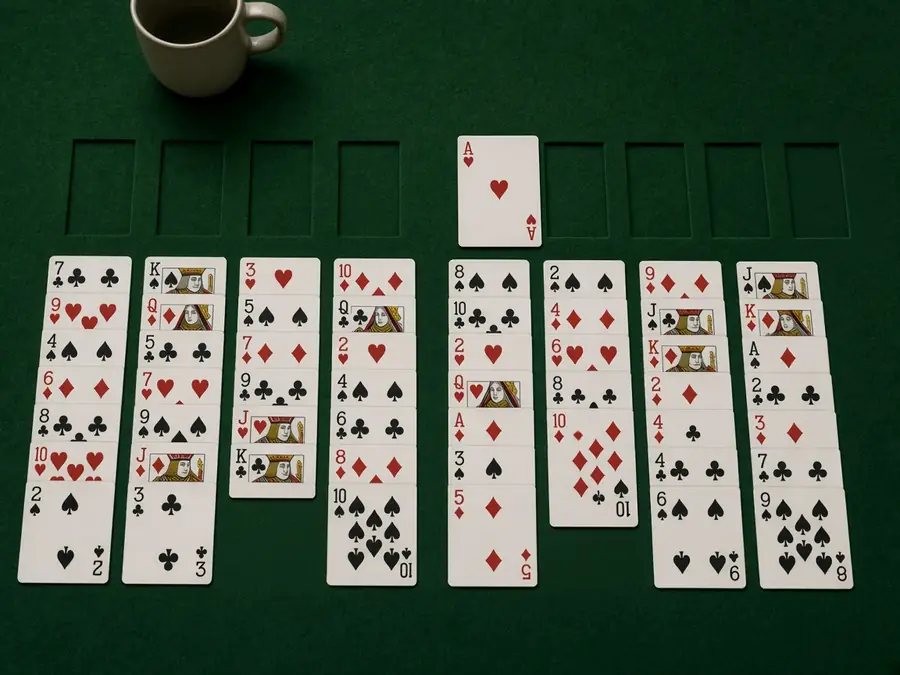
Foundation timing is about table health, not speed
Good foundation timing is not about speed. It is about whether the table can still work after the card leaves. Aces, twos, and threes matter, but not every legal foundation move belongs right now. If the card still anchors a landing spot, or its departure cuts off another line, let it stay in the tableau a little longer. The better test is simple: once the card goes up, can the column below keep moving, and is there enough space to continue the sequence behind it? If both answers are yes, take the point.
Run Through These Six Checks Before You Commit
Check the working slotsHow many free cells stay open after this move? If you are about to spend the last one, slow down.
Check the empty columnDoes this move create an empty column, or does it throw away one you just earned?
Check the landing spotAfter this card moves, where do the cards behind it still go? Do not spend the only good landing spot too early.
Check whether it is temporaryIf a card goes into a free cell or empty column, can it come back out quickly? If not, the move is harder to justify.
Check the foundation timingA legal foundation move is not enough by itself. The tableau still needs to work after the card leaves.
Check the way back outIf this read is wrong, do you still have room to rewind and rebuild? The less reversible the move, the slower it deserves to be played.
Common FreeCell Midgame Questions
Why do I keep getting stuck in the middle game?
Because the earlier moves stayed legal without preserving enough room. Free cells stayed occupied, empty columns were filled too quickly, and landing spots disappeared ahead of schedule. The table looks active until it suddenly has no way forward.
When has a free cell been occupied for too long?
When a card enters the free cell and two or three moves later you still cannot explain where it is headed. The healthy pattern is brief: park it, reveal the hidden card, move it back out.
Should I use an empty column for a single card or save it?
Most of the time, save it. A single card can often land somewhere else. A truly empty column is rare, and it becomes much more valuable once it can help you move a whole run or rebuild a blocked lane.
Should I send fewer cards to the foundations in the midgame?
Not fewer, just less mechanically. If moving the card up breaks a landing spot or strands the sequence behind it, wait until the tableau is ready for it.
How do I tell whether a move is progress or just stalling?
Look for something concrete in return: one more open free cell, one better empty-column lane, one preserved landing spot, or one column closer to empty. If none of that changed, the cards moved but the position probably did not improve. An easy move is not the same thing as a productive move.
What should I protect first in the midgame?
Protect working room first, then landing spots, and only after that the move that feels easiest right now. The tableau does not have to look pretty. It has to stay alive on the next move. Midgames are won less by courage than by restraint.
What should I practice first after reading this page?
Two habits matter most: before using a free cell, name the next landing spot; after clearing an empty column, resist filling it immediately. Once those two checks become automatic, the middle game usually steadies out.
Read the Midgame, Then Put It on the Table
Make These Two Midgame Checks Automatic
Before you spend a free cell, name the next landing spot. After you clear an empty column, resist filling it immediately. Once those two habits become automatic, the midgame stops collapsing under its own momentum.
Keep Reading
Review the rules if you want the base structure first. Revisit the opening page if the first round still decides too much for you. Then play a deal and walk through this order from the moment the table starts to tighten.