FreeCell
At your own pace
A quiet record of every deal
0
Wins
—
Best time
—
Fewest moves
Cleared deals
This record lives in the current browser only. There is no account, and nothing is synced to another device. Clearing site data, or the button below, removes it.
This cannot be undone. Clear the record stored in this browser?
Count First, Move Second
FreeCell has no hidden cards. The hard part is not luck. It is knowing, before every move, how much working room you still have. Start by finding the buried low cards, then judge how much support your free cells and empty columns give the next sequence. This table uses the standard eight cascades, four free cells, and four foundations. Undo lets you take a line back; auto-collect sends safe cards home. Hint uses an open-source solver in your browser: the first tap marks the suggested origin and landing spot, and the second tap plays that move. On a solvable deal you can keep following it; if the position is already lost, Hint will say so.
Before You Move, Ask Four Things
Which key card does this move uncover?
Look first for buried Aces, twos, and threes, and for the next card your foundations still need. A move that reveals one of those cards is usually worth more than a tidy-looking build.
Does this shorten a column?
When a column is close to empty, think about what happens after you move its bottom card. An empty column can hold an entire ordered run, so clearing one is often more valuable than extending a stack.
Do you still have enough free cells to work with?
Every occupied free cell cuts down the length of the sequence you can move. Before you park a card there, know where it is going next.
Will sending this card home break the next sequence?
Not every legal card belongs in the foundation right away. If that card is still the only landing spot for another color, check the damage before you move it.
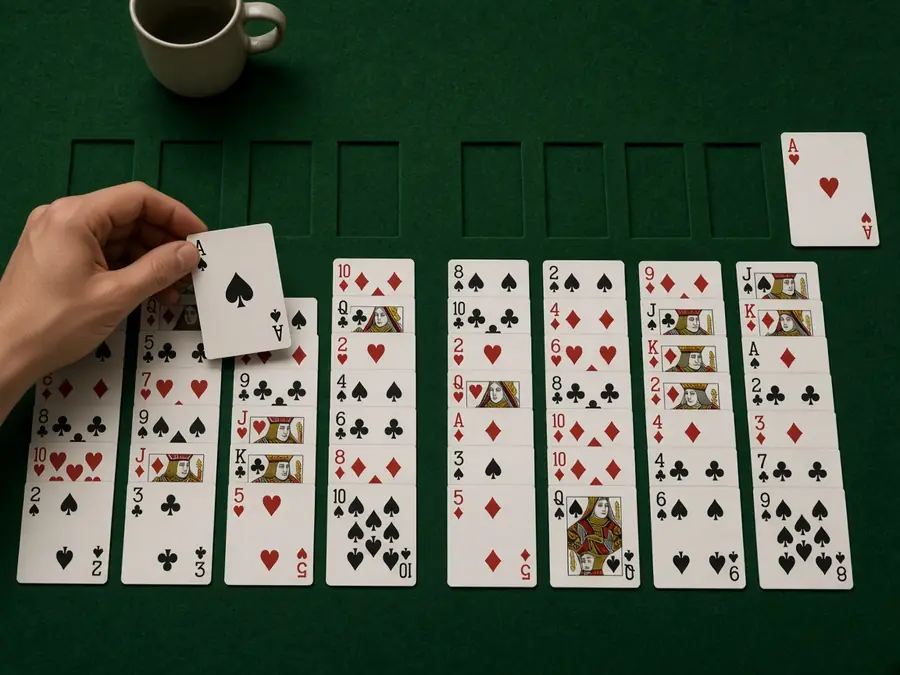
Free the low cards first
At the start, find the columns that hold Aces, twos, and threes, then check what is sitting on top of them. Prioritize moves that bring those low cards into play. If two moves both work, take the one that keeps the foundations moving and shortens a column. Do not bury low cards even deeper just to build a prettier run.
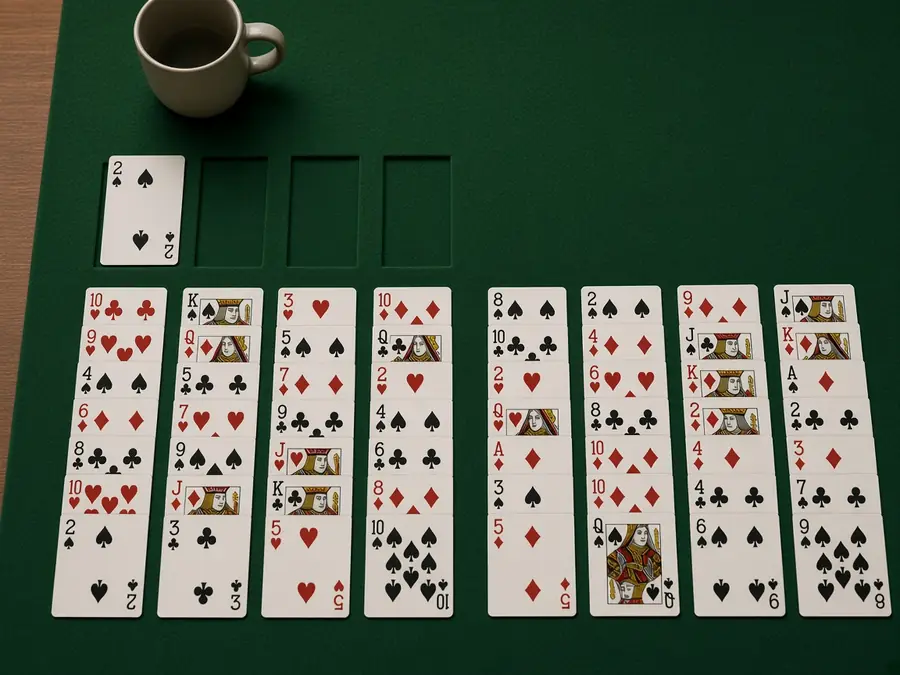
Treat free cells as temporary
Free cells are for splitting a sequence, exposing the base of a column, or finishing one transfer. They are not storage. Each time you park a card there, you should already know where it is going next, either back into a cascade or up to the foundation. Once all four cells are full, the table tightens quickly.
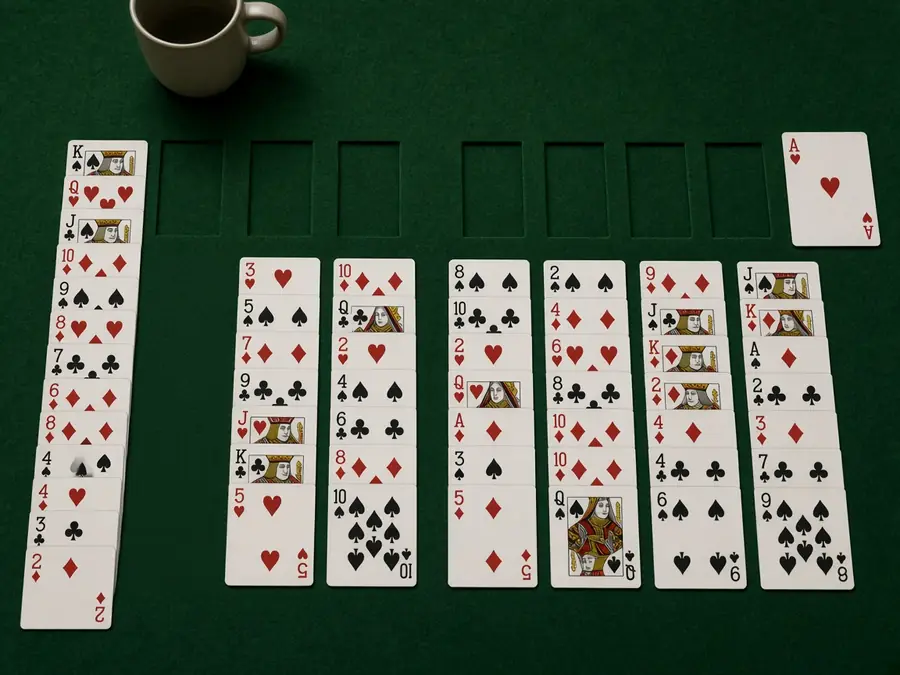
Empty columns decide the ceiling
A free cell holds one card. An empty column can hold a full descending run in alternating colors. When the table starts to jam, compare how far each column is from clearing. If you are close to making an empty column, protect the free cells you need and do not rush every legal card into the foundations.
Start with low cardsUncover buried Aces, twos, and threes before you spend moves on cosmetic cleanup.
Keep room to maneuverBefore you fill the last free cell, count whether the key sequence can still be moved.
Fight for an empty columnClear a column first, then build the longer sequence. Your working space grows immediately.
Send cards home carefullyBefore a card goes to the foundation, make sure it is not still the only landing spot your table needs.
Frequently Asked Questions
How is FreeCell different from Klondike?
In FreeCell, every card is face up from the start. There is no hidden stock to wait on. The game is about managing columns, free cells, and foundations in the right order. Klondike still hides information.
What is the difference between a free cell and an empty column?
A free cell can hold only one card. An empty column can take a legal descending run in alternating colors. Both matter for moving sequences, but an empty column gives you much more room to rebuild the table.
Why can an all-face-up deal still get stuck?
Most dead positions come from losing working room. Free cells fill up, empty columns get used too early, or a key landing card is sent home before the table is ready for it. If you want to check whether the current layout can still be won, tap Hint.
Should I keep moving when all four free cells are full?
Only if the move immediately uncovers a low card, clears a column, or gives a free cell back on the next turn. If it does none of those things, undo and rebuild the order.
How does Hint work?
Hint uses an open-source FreeCell solver in your browser and reads the current layout. The first tap marks the origin and landing spot; the second tap plays that move. On a solvable deal you can keep following Hint until the table is clear. If the position is already lost, Hint says so. The same button works on a phone.