FreeCell Opening Decisions
Bad openings rarely fail because there was nothing to play. They fail because the first round spent the working room for the whole deal. The first questions are not which build looks longest or which move looks smoothest. They are where the low cards are buried, which column is worth dismantling, and which easy move burns a landing spot too early. This page keeps the focus on the opening and gives that first round a stricter order.
Check These Four Things Before Move One
Start with the buried low cards
Your first look should go to the Aces, twos, and threes, not to the cleanest-looking build. The deeper they are buried, the slower your foundations will start. At the start of a deal, note which columns they sit in so each move tells you whether you are advancing or just neatening the layout.
Back the column closest to empty
One or two columns are usually only a move or two away from exposing the bottom card, or even getting close to an empty column. Find that lane first, then decide whether it deserves your attention. The value is not making a long build look nicer. It is pushing the column closest to clearing one step further.
Do not mistake a neat build for progress
Connecting a full run feels good, but stop for a second. Ask what the move actually buys you. Does it expose a key card, or does it only make the tableau look tidier? If it buries low cards one layer deeper or spends a key landing spot too early, it is a pretty move that leaves the position poorer than it looks.
Move one still needs a way back
Every move should include the next landing spot and the way back out. The easiest mistake is to ask only whether a move is legal, not what remains after it. If the next move is already unclear, that first move probably is not worth making yet.
Four Opening Reads That Decide the First Round
What should I flip first in the opening?
Prioritize low cards that can start the foundations, especially Aces, twos, and threes. When two lines are both playable, compare one thing first: which line reveals a low card faster. Once the foundations start moving, the rest of the tableau tends to loosen with them. The later those low cards appear, the more working room you have to spend to rescue them.
What is the difference between surface cleanup and real progress?
Surface cleanup makes the tableau look nicer, but no key card appears, no landing spot is preserved, and no empty column gets any closer. Real progress always gives you something tangible: a low card exposed, a column shortened, a landing spot preserved, or a column brought closer to clearing. If none of those happened, you probably just reorganized the mess.
Should I use a free cell on the first move?
You can, but keep it short. The best use is to park a card briefly, expose what is underneath, and send it back out quickly. If you still cannot say where that card goes next once it reaches the free cell, you are probably burning the most valuable working room in the whole deal.
What kind of opening tightens up the fastest?
Three patterns show up again and again: taking the first obvious build, auto-playing a card to the foundations the moment you can, or filling any open spot just because it is there. The shared problem is simple: the move feels good locally, but it spends room the whole deal still needs.
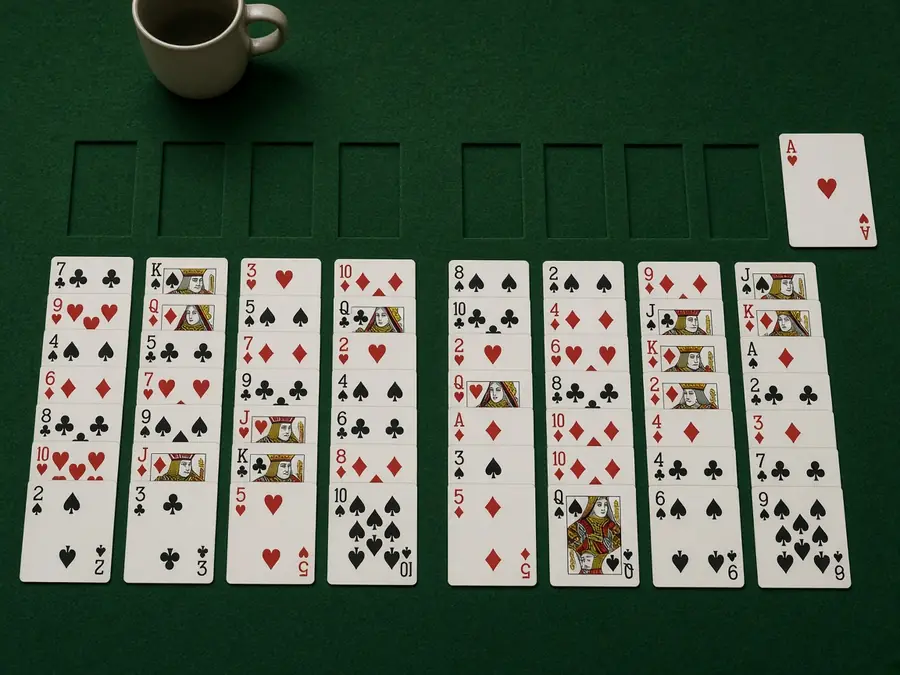
Find the buried low cards before the pretty build finds you
Before the obvious build pulls your eye away, find the Aces, twos, and threes. Which columns are they buried in? Are they under a long chain or a short one? That is what tells you which lane deserves your first few moves. If the low cards stay buried, the foundations stall, and the tableau keeps playing tight. The simplest opening habit is still the best one: sweep all eight columns, mark the low cards, then start moving.
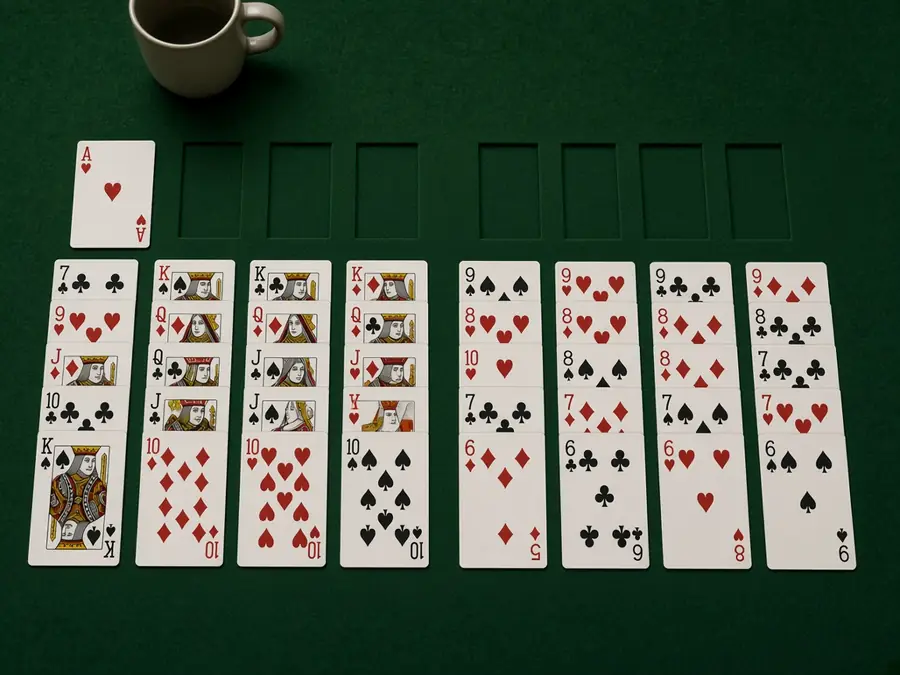
Dismantle the column that pays you back
The point is not to find the prettiest column. It is to find the column worth taking apart. The best target usually has two traits: it is covering low cards, and it is only a few steps from clearing. A column that gives you both is usually more valuable than any move that only extends a run. After the move, ask one direct question: is this column shorter, and is the bottom card closer to the surface? If the answer is yes, you moved the position forward, even if the tableau looks rougher for a moment.
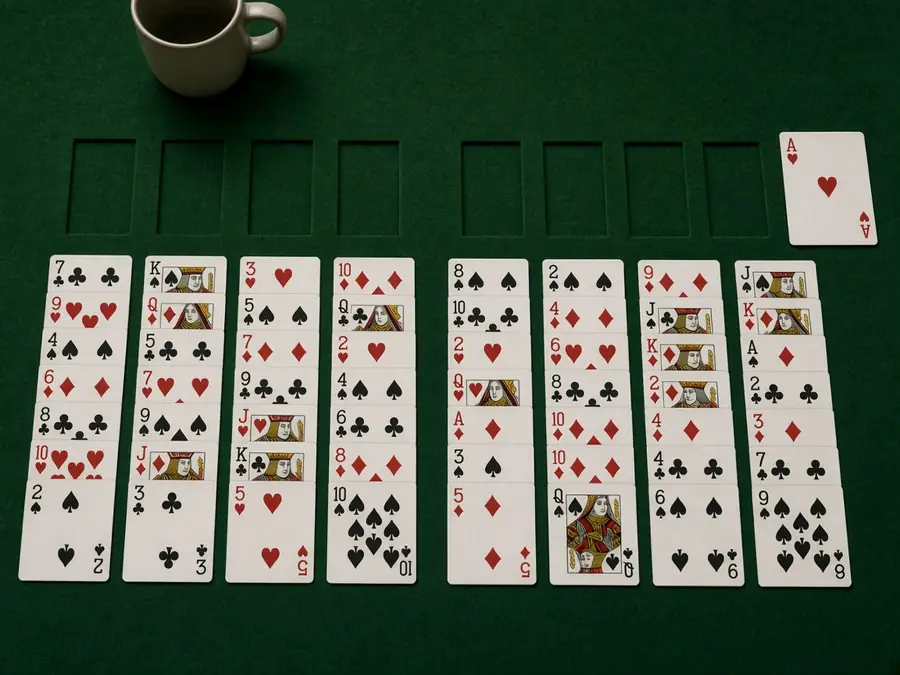
Use the opening to build your first empty column
The best opening move often does not score something immediately. It lays the groundwork for the first empty column. Ask yourself which of the eight columns is most likely to clear first. Once that answer is in front of you, a lot of fuzzy choices get simpler. Moves that shorten that lane, protect the cards underneath it, and avoid pointless refill moves deserve priority. If a move pushes that column one step closer to empty, it already did real work.
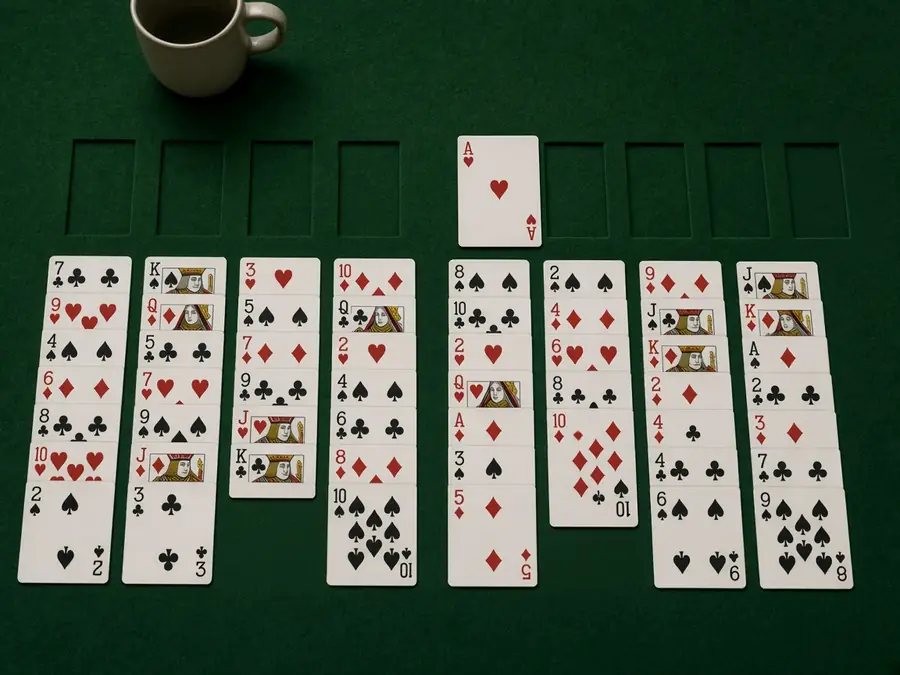
Do not cash the easy foundation move before checking the damage
Aces and twos matter, but that does not mean every playable one should go up immediately. In many deals, a low card is also a critical landing spot at that moment. If you send it to the foundations too early, the move can look like progress while actually cutting off another line of play. The safer habit is to check what remains after the card leaves. If you cannot clearly see where the next card will go, leave it down and keep the tableau alive.
Run Through These Six Checks Before You Commit
Ask if it is worth itIs this move real progress, or does it only make the tableau look cleaner?
Check the low cardsDoes it expose an Ace, two, or three, or at least shorten the column sitting on top of one?
Check the landing spotWhere does the next card go after this move? Are you spending a key landing spot too early?
Control the free cellsIf this card goes into a free cell, is the next step already clear? If not, do not spend the slot yet.
Track the empty-column laneDoes this move bring any column closer to clearing? If it does, it is usually worth more than local cleanup.
Keep a Way BackIf this read turns out to be wrong, do you still have room to back out and rearrange?
Common FreeCell Opening Questions
Should the first move always be an Ace if I can uncover one?
No. The real priority is the line that gets you to the next Ace, two, or three fastest. Do not focus on one card in isolation. Focus on which lane starts the foundations sooner.
Why do my openings feel smooth at first and then tighten up five or six moves later?
Because a lot of smooth-looking moves are just local cleanup. They do not expose low cards, preserve landing spots, or move you closer to an empty column. If your first several moves are all obvious builds, the middle game often runs out of working room without warning. The opening is not ruined by mess. It is ruined by fake progress.
What is the problem with building a long sequence right away?
The issue is not the sequence itself. The problem is that it often buries important low cards deeper and spends landing spots earlier than you can afford. If the build does not clearly help you reveal low cards or work toward an empty column, it should not lead the opening.
Can I use a free cell on move one?
Yes, but only with a clear next step. The good version is temporary: break the block, reveal the hidden card, move the parked card back out. The bad version is parking something there just because it fits.
Should I send cards to the foundations early?
Only when the card is no longer doing important work in the tableau. If it still serves as a key landing spot, keep the table loose first and score the card later.
How do I tell which column is the best one to dismantle first?
Check whether it is covering low cards, then check how close it is to empty. The column that does both is usually where your moves are best spent. If the choice is close, favor the line that reveals the bottom card faster.
If two lines are both playable, how do I choose?
Use this order: the line that reveals low cards faster, then the line that gets closer to an empty column, then the line that preserves more free cells and landing spots. The line that wins on more of those checks goes first. The first move is not the smoothest one. It is the most valuable one.
Read the Opening, Then Put It on the Table
Make These Two Opening Checks Automatic
At the start of each deal, sweep the table for the Aces, twos, and threes. Before the first move, check whether it reveals a key card or only tidies the tableau. Once those two checks become automatic, the opening stops running on feel.
Keep Reading
Review the rules if you want the base structure first. Move on to the midgame page if your deals usually tighten later. Then play a deal and run this opening order against a live table.