How to Play FreeCell
FreeCell is easy to explain and hard to play well. The 52 cards are dealt into eight columns, with four free cells and four foundations at the top. Columns build down in alternating colors, free cells hold one card each, and foundations build by suit from Ace to King. The real edge comes from knowing when to uncover low cards, when to protect an empty column, and when to leave an easy foundation move alone.
Turn These Four Rules Into Decisions
Build down in alternating colors
Cards in the columns build down by rank in alternating colors. A black 8 can take a red 7, but it cannot take another black 7. The rule is simple. The hard part is not giving away a key landing spot too casually.
Use free cells to lift, not to store
The four free cells each hold one card. They are not for long-term parking. They are temporary working slots for breaking a block, exposing a buried card, and making room for the next move. The longer a card sits there, the tighter the deal becomes.
Foundations score the deal
Each foundation starts with an Ace and builds by suit up to King. Once all 52 cards are moved home, the deal is complete. A legal foundation move is not always the right move if that card is still holding the tableau together.
Empty columns win the hard positions
Clearing an entire column gives you more than one empty landing spot. It gives you workspace for rebuilding long runs. A lot of hard deals open up not because one more card went home, but because one empty column finally appeared.
Four Rules Reads That Change Real Deals
What should I look at first in the opening?
Start with the Aces, twos, and threes, and the cards sitting on top of them. The sooner those low cards come out, the sooner your foundations start moving and the more room the table gives you. A lot of deals tighten because those low cards stay buried too long.
When should I break a sequence apart?
When space is tight, break things apart. The fewer free cells and empty columns you have left, the shorter the sequence you can move as a unit. Forcing a long transfer usually leaves the table tighter than before.
Why can a fully visible deal still die anyway?
Because FreeCell is not about missing information. It is about running out of room to act. Once the free cells are full and the empty columns are gone, you may know the right move and still have no way to reach it. The limiting factor is often not what you see, but how much working room is left.
When should I back up early?
If the last free cell is about to fill, the key low cards are still buried, or a column you just cleared is about to be filled again, back up early. Undoing is not failure. It is often the fastest way to get your working room back before the deal locks up.
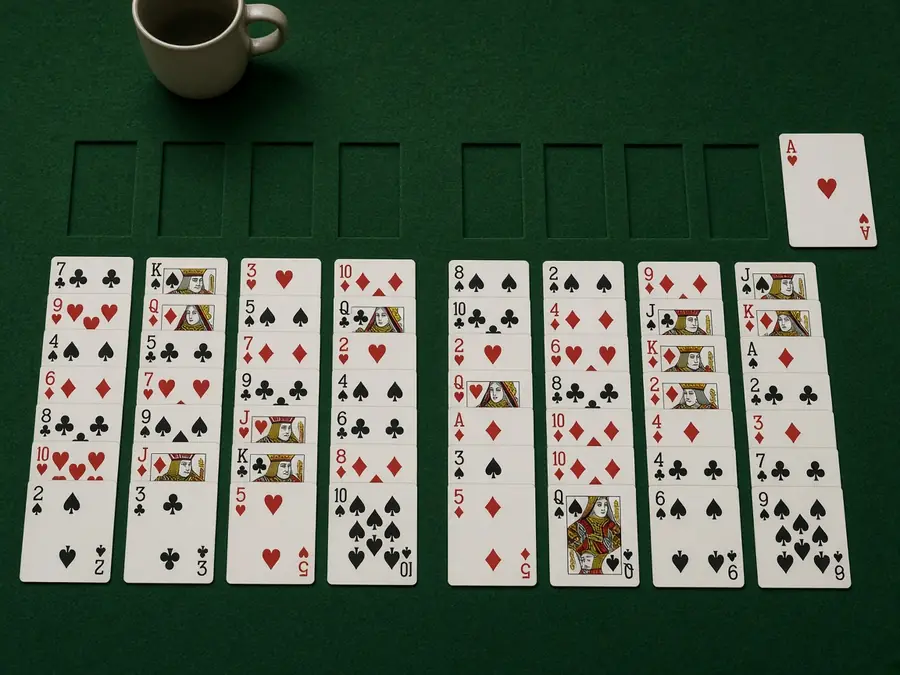
Winning starts with the cards that unlock the foundations
Your first job is simple: bring out the Aces, twos, and threes as quickly as you can. The sooner the foundations begin, the more landing spots and working room you have later. Spend the opening on a pretty build instead, and the table can look tidy while the important cards stay trapped underneath.
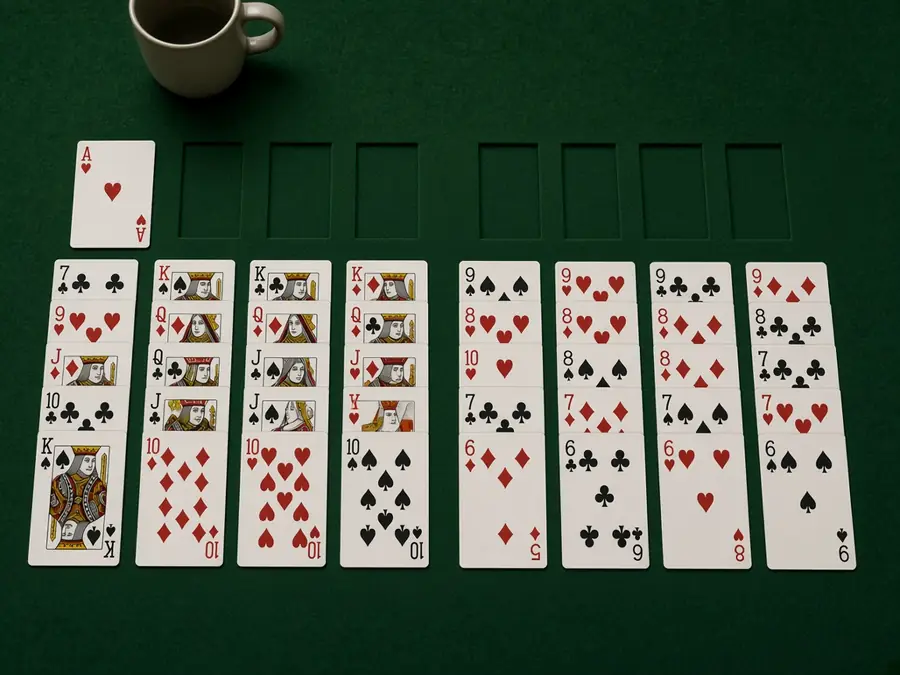
Treat working space like working space
A free cell is working space, not storage. Every extra free cell you occupy cuts into your future options. Empty columns work the same way: they are hard to earn and easy to waste. The steadier line is to think one move ahead every time you use a free cell or an empty column, so you know how that space is coming back.
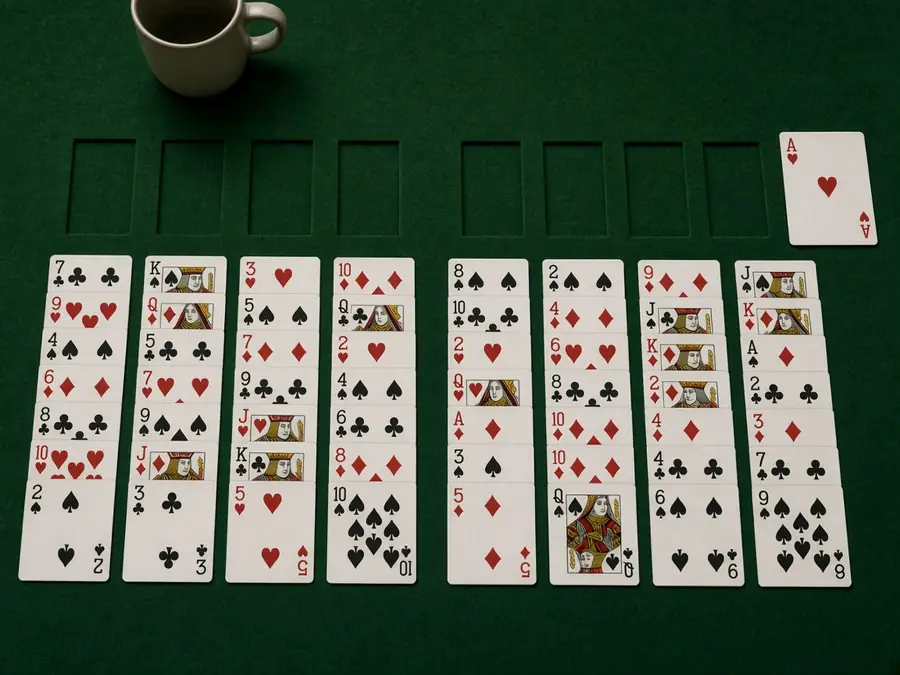
When the table tightens, fight for the empty column
What decides the middle and late game is often not one more card home, but one more empty column. An empty column can receive a full ordered run or let you tear down and rebuild a whole area of the table. When the position starts to tighten, look for the column that is closest to clearing. A line that wins an empty column is usually worth more than one that only cashes an easy foundation move.
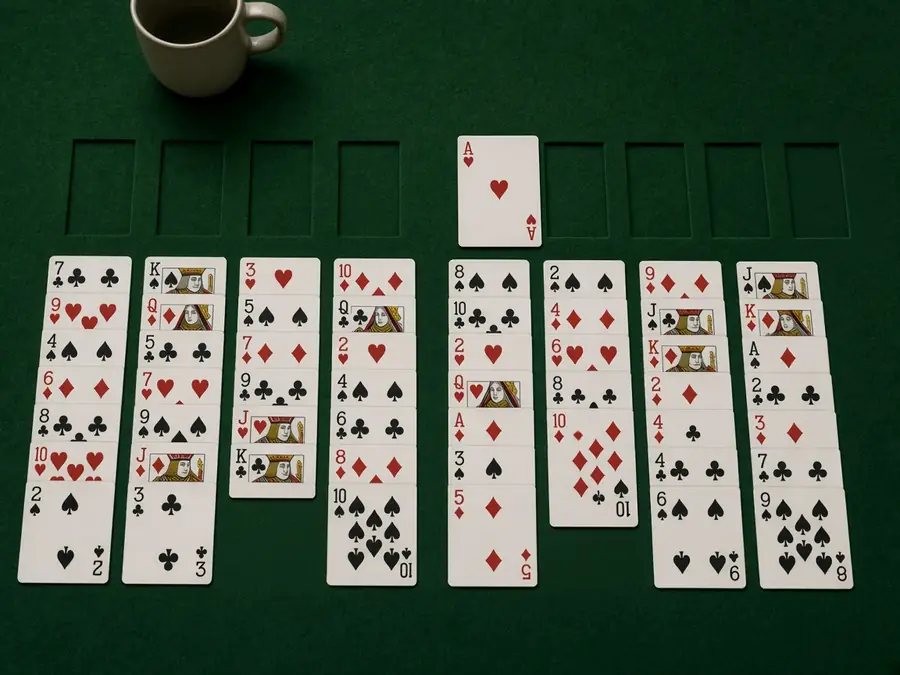
The safer line is the one you can still reverse
Getting cards onto the foundations is the goal, but not every legal foundation move belongs right away. The steadier line keeps your options reversible for as long as possible. If a low card is still acting as an important landing spot in the columns, sending it home too soon can cut off the route for an entire sequence. When a move feels final, ask one thing first: if this is wrong, what is my way back?
Run Through These Six Checks Before You Move
Start With the Low CardsDoes this move uncover an Ace, two, or three, or at least bring one of them closer to the surface?
Then Check the Landing SpotOnce this card moves, where is the next move supposed to land? If there is no landing spot after this, the move is probably just delaying the problem.
Keep Working Slots OpenDo not fill all four free cells lightly, and do not put a card back into a newly cleared column too quickly.
Trade for Empty ColumnsThe value of one full empty column is usually greater than the value of a small local cleanup.
Ask About Foundations LastBeing able to send a card home is one question. Whether you should do it now is another. First check whether it breaks an important landing relationship in the columns.
Check Whether You Can Undo ItIf this move turns out to be wrong, do you still have room to back up and rebuild? The less reversible a move is, the more slowly you should treat it.
Common FreeCell Rules Questions
What is the actual goal in FreeCell?
Move all 52 cards to the four foundations by suit, from Ace up to King. Once all four foundations are complete, the deal is over. The goal is simple. The real challenge is reaching it without spending all your landing spots and working room too early.
Why do other players beat deals that keep killing me?
Most of the time it is not a rules problem. It is an order-of-play problem. Low cards were left buried, key landing spots were not protected, or an empty column was spent too early, and the table narrowed with each move.
How many cards can I move at once?
Not as many as you want. The answer depends on how many free cells and empty columns you still have open. The more space you keep, the longer the ordered sequence you can move together.
When is it better to do nothing than to force a move?
If the move does not uncover a key low card, does not help you clear a column, and costs you the last free cell, it is usually not worth forcing. A lot of losing lines come from two unnecessary moves, not from one missing move.
Should I always send an Ace or a two home right away?
Usually it is correct to do so early, but not mechanically. If that card is still acting as an important landing spot in the columns, check first whether moving it home will strand something more important. The foundations need to grow, but the tableau still has to breathe.
Which matters more, an empty column or a free cell?
Both matter, but in the middle and late game an empty column is usually worth more. A free cell solves a short tactical step. An empty column solves full-column rebuilds and long sequence transfers.
What habit narrows the table fastest?
Playing every legal move as soon as you see it. A better habit is to ask what the move is for before you make it: uncovering a key card, clearing a column, protecting a landing spot, or simply making the layout look cleaner. If the answer is mostly cosmetic, the move usually is not urgent.
Read the Rules, Then Put Them on the Table
Make These Two Checks Automatic
Before every move, check whether it uncovers a low card. Before you occupy a free cell, know where that card is going next. Once those two checks become automatic, a lot of tight deals start loosening on their own.
Keep Reading
Read the opening page first, then the midgame page, then play a deal and run the same order against a live position.